
Aircond Tripping the Breaker? Electrical Troubleshooting Guide
Aircond keeps tripping the breaker? Could be compressor surge, undersized breaker, short circuit, or capacitor failure. Diagnostic walkthrough.
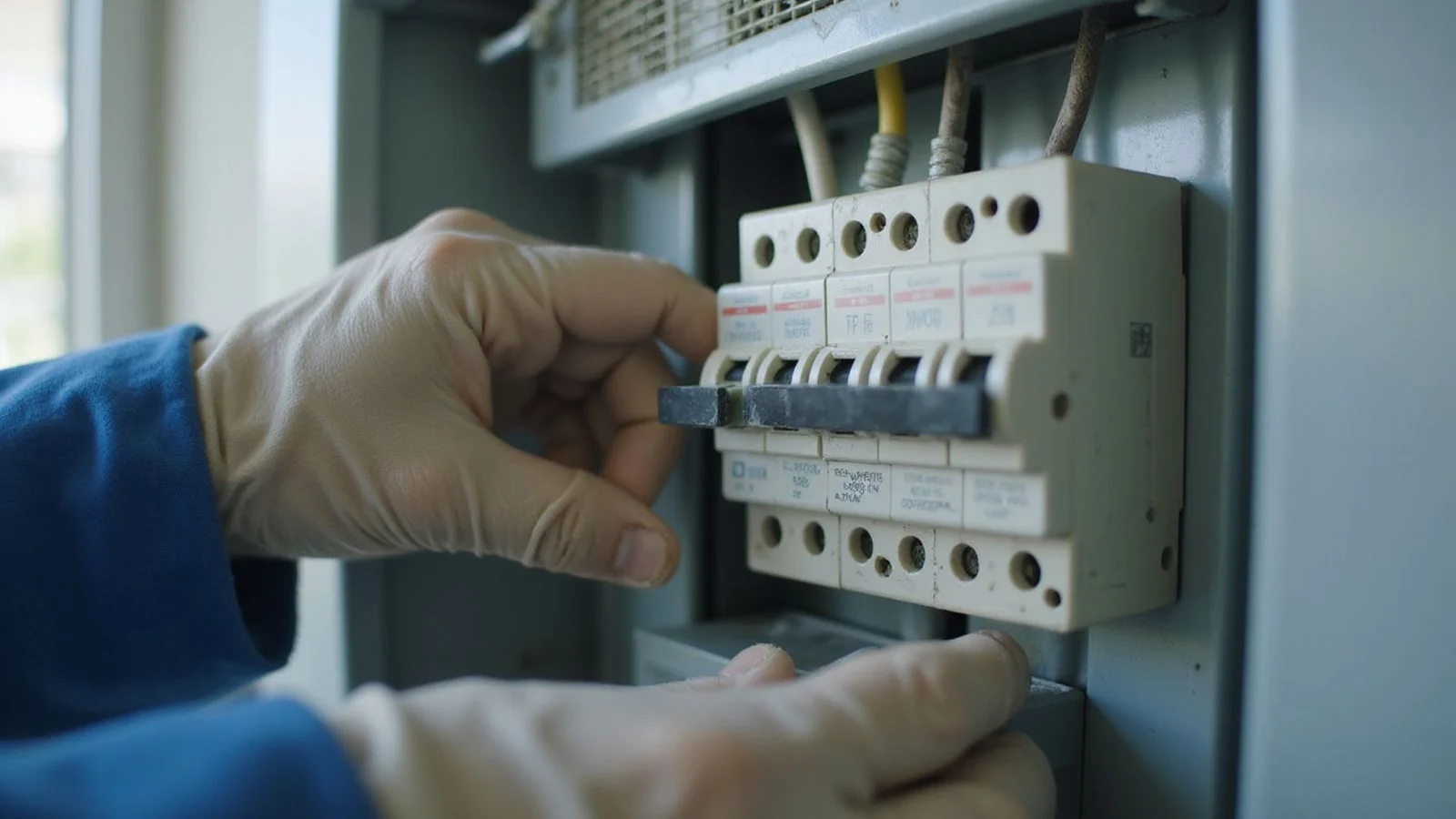
We often see property managers caught in a frustrating diagnostic grey zone when dealing with an aircond tripping breaker.
This situation usually ends with customers paying for two separate callouts and receiving contradicting advice. The root problem is that an air conditioner pulling too much power sits directly between the expertise of a standard technician and a general wireman.
Our goal is to provide a clear path forward, and we regularly handle these overlapping issues during routine aircond electrical maintenance. Let us break down the exact mechanical triggers like worn bearings, the local regulatory standards, and the specific signs that dictate whether you need a simple parts swap or a full rewiring.
Why aircond compressors trip breakers: the basic mechanism
A compressor requires a massive burst of power to start spinning, typically pulling five to seven times its normal running current for a fraction of a second. This start-up surge is completely normal for single-phase 240V systems used across Malaysia. We know that a dedicated 20A Miniature Circuit Breaker (MCB) must handle this brief spike without cutting the power.
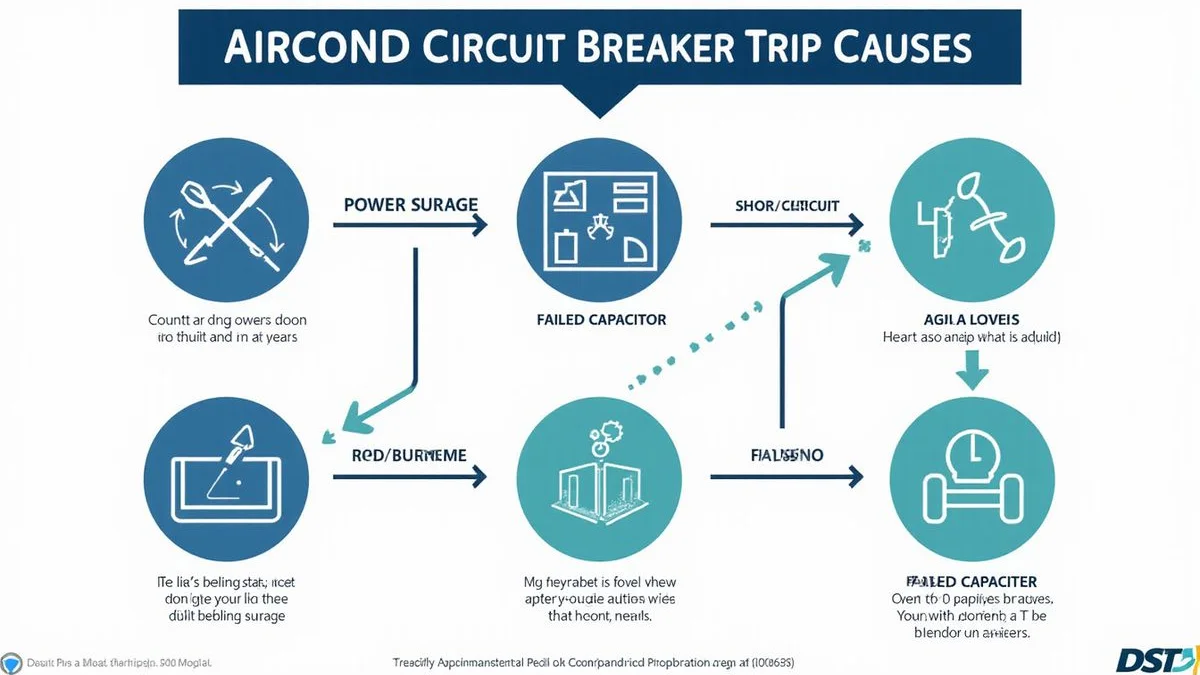
When that start-up surge begins tripping the safety switches, one of three fundamental variables has shifted. The electrical draw from the compressor has exceeded the normal limit due to an internal fault. A degraded breaker has weakened and can no longer sustain its rated capacity. Our technicians also frequently find that cumulative wear on components like the starting capacitor pushes the entire system over the safe threshold.
Common causes in order of likelihood
Cause 1: Run capacitor failing (most common)
A weak capacitor forces the compressor to start sluggishly, which draws higher current for a longer duration. This extended surge eventually surpasses what the Miniature Circuit Breaker can tolerate. We recommend checking this component first since it is the most common failure point.
- How to spot: Open the outdoor unit cover after shutting off the main isolator switch. Look directly at the capacitor, which is a silver cylinder usually the size of a thumb or a small drink can. You will often notice swelling, a bulging top disc, or fluid leaking down the sides of the casing.
- Fix: Swap the faulty unit for a new CBB65 motor-run capacitor. We see standard replacement costs running between RM80 and RM150 in the Klang Valley for 2026. This is a fast, single-visit fix, and you can review other common parts that fail to understand the lifespan of these components.
Cause 2: Undersized circuit breaker
The original installer likely fitted a breaker rated lower than the required specifications printed on the outdoor unit. This shortcut worked for years because a brand new compressor runs highly efficiently. Our field data shows that as mechanical parts age, the start-up surge increases and easily overwhelms a lower-rated switch.
- How to spot: Check the amperage rating printed directly on the main distribution board switch, such as a Hager or ABB 20A label. Compare that number directly to the maximum amp rating listed on the metal nameplate attached to your outdoor condenser.
- Fix: Upgrade the breaker to match the manufacturer specifications. We strictly follow Suruhanjaya Tenaga (ST) guidelines requiring a dedicated 20A double-pole switch using 2.5mm² copper wiring for standard 1.0HP to 1.5HP residential models.
Cause 3: Short circuit
A damaged wire has created a direct electrical short at the compressor terminals, inside the indoor blower, or along the connecting copper piping. Modern safety panels detect this massive fault and cut the power instantly to prevent electrical fires. We often find that local pests like lizards cause these shorts on the outdoor printed circuit board.
- How to spot: You will smell melting PVC plastic near the distribution board or the outdoor condenser. Look for visible black scorch marks on the terminal block, and note that the machine will fail to start completely rather than tripping randomly.
- Fix: Trace the electrical path to locate the short and replace the burnt wiring sections. We strongly advise you to stop using the system immediately until a professional secures the connections.
Cause 4: Compressor wear (mechanical)
An aging compressor with worn internal bearings requires significantly more energy to overcome physical friction. This mechanical resistance combines with the normal start-up surge to trigger an overload protection fault. We typically see the Locked Rotor Amps (LRA) drawing too much power on these older units.
- How to spot: Check if the hardware is more than eight years old. You might notice the cooling performance steadily declining over the past few months. Other recent failures, like a burnt fan motor or a blown capacitor, usually lead up to this point.
- Fix: A seizing compressor usually means you need to buy a new system. Our engineers suggest evaluating your options by reading this guide on repair vs replacement.
DIY reset: when it is OK, when it is not
Resetting a tripped switch once or twice after a storm is generally safe. Random faults happen due to Tenaga Nasional Berhad (TNB) grid fluctuations, nearby lightning strikes, or momentary power surges. We use the “Rule of Three” to determine when a simple reset becomes a safety hazard.
Three trips within a single week indicates a serious underlying fault. You must stop forcing the switch back on because the safety device is actively protecting your property from a severe electrical danger. Stop immediately and leave the power off if you observe any of the following warning signs:
- Smell of melting plastic at the main panel or the outdoor condenser.
- Blackened or warped plastic around the specific breaker switch.
- Visible sparks flashing when you attempt to push the lever up.
- Tingling electrical sensations when touching the indoor casing.
- Multiple switches dropping simultaneously across the distribution board.
Our team considers these to be emergency signs that require an immediate call to an electrician.
When to involve an electrician vs aircond tech
This specific crossover point causes genuine confusion and forces many owners to pay for duplicate service calls. We use a straightforward set of rules to determine exactly which professional you need to contact first.
| Symptom | Underlying Cause | Who to Call |
|---|---|---|
| Trips exactly when the compressor kicks in | Capacitor, compressor fault, or dedicated wiring issue | Aircond Technician |
| Trips randomly during normal cooling operation | Overheating motor or loose terminal connection | Either Professional |
| A complete aircond db board trip occurs simultaneously with other switches | Distribution board overload or main phase imbalance | Licensed Electrician |
| Whole property loses power, but the cooling unit is off | Unrelated household electrical fault | Licensed Electrician |
Review our detailed breakdown on choosing an electrician vs aircond technician for the complete decision tree.
How AMg handles an aircond electrical fault
We evaluate both the mechanical components and the power supply during a single diagnostic visit. A Fluke digital multimeter helps technicians test the capacitor, while a clamp meter measures the exact locked rotor amps during start-up. Within 15 minutes, the exact location of the fault becomes clear.
We can confidently determine whether the issue lies inside the cooling unit or at the distribution board. Service teams carry the necessary CBB65 capacitors, contactors, and dedicated switches to resolve standard electrical faults immediately. This allows us to handle the repairs in-house without delay.
We refer major structural power issues, like a complete distribution board rebuild or full property rewiring, to an ST-licensed wireman whom we rely on completely. This process guarantees you receive one accurate diagnosis and one clear solution without any runaround. To speed up the diagnostic process, WhatsApp us with these specific details:
- How often the power drops during the day.
- Whether the trip happens at start-up or during regular running.
- If other household appliances or circuits fail simultaneously.
We will calculate a transparent diagnostic quote and provide a likely repair estimate before dispatching a team.
Fixing an aircond tripping breaker requires accurate diagnostic testing rather than guesswork.
You can save time and money by paying attention to exactly when the power cuts out and checking for basic signs like a swollen capacitor. Our technical team is ready to secure a safe, permanent fix for your cooling system today.
Frequently asked questions
Is it safe to keep resetting the breaker? +
Two resets maximum. After that, the trip is protecting from a real fault. Stop resetting and call a professional — repeated tripping can damage the compressor or cause electrical danger.
Why does only the aircond breaker trip, not the whole house? +
The dedicated AC circuit doing its job — isolating the fault to one circuit. Common causes: capacitor failure, compressor wear, undersized MCB.
Could it be a problem with TNB / outside power supply? +
Possible after lightning strikes or major surges — check if neighbours also experienced trips. Otherwise it's internal to your AC or your house circuit.
Ready to book this work with AMg?
5-star Google rating, tidy workmanship, transparent pricing. WhatsApp us for a free quote — same-day response, 8 AM – 6 PM daily.