
How to Tell If Your Aircond Is Low on Refrigerant
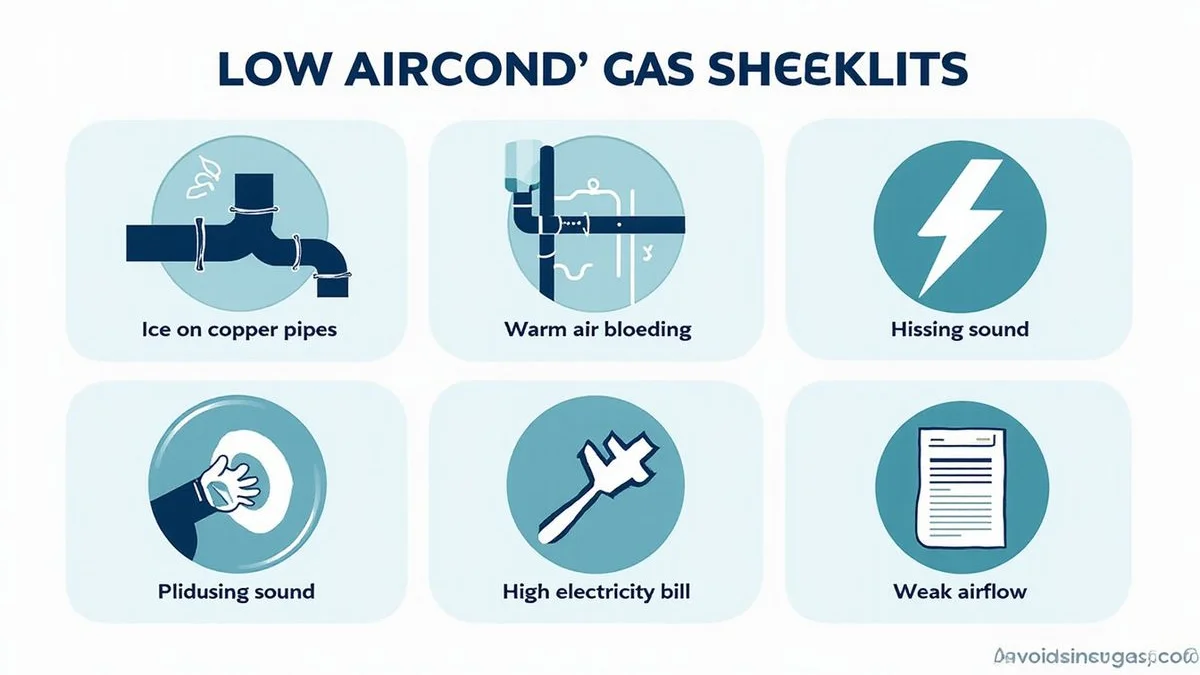
Weak cooling, ice on copper line, hissing sound, longer cycle times, higher TNB bill — signs your aircond is low on refrigerant.
You know how an aircond suddenly stops blowing cold, and everyone immediately assumes it just needs a top-up? Our service team hears this assumption daily from homeowners across Petaling Jaya. The truth is that refrigerant operates in a closed loop, meaning it never gets consumed during normal use.
If your unit lacks pressure, a leak is absolutely the culprit.
Recognising the common signs an aircond is low on gas early gives you time to book a proper leak detection service before the system ruins itself trying to compensate. For booking, see aircond gas top-up.
Sign 1: Weak cooling despite clean filter and clean coils
This specific symptom is the most frequent issue we encounter that gets misdiagnosed. A low refrigerant aircond always suffers a sharp cooling capacity drop. Our technicians always check the basics first before hooking up the pressure gauges.
You should confirm a few things before assuming the worst.
Here is a quick checklist to verify the state of your unit:
- The internal filters are completely free of dust.
- The indoor coils had a recent chemical wash.
- The blower motor sounds completely normal.
- The air exiting the louvers feels lukewarm.
When the airflow is strong but the temperature is weak, a leak is highly probable. A dirty coil or a failing compressor presents very different symptoms. You need a proper pressure check to confirm the exact levels.
Sign 2: Ice forming on the copper line or evaporator coil
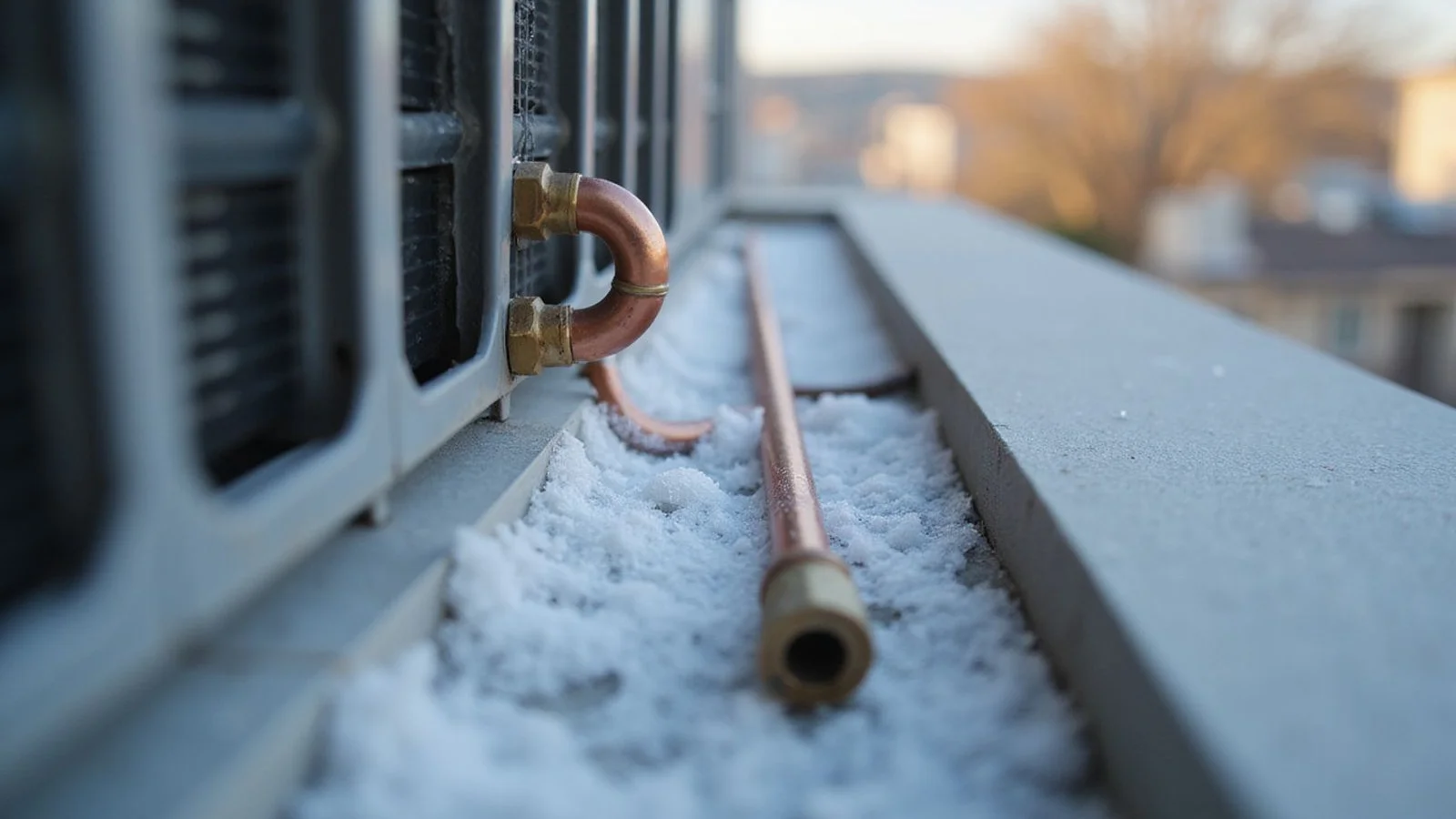
Frost or solid ice forming on the outdoor copper pipe means the internal pressure has dropped well below specification. This visual cue is the absolute strongest indicator of a leak. Walk outside and inspect the line connecting the indoor unit to the outdoor condenser.
Our team considers this a critical warning sign that requires immediate action. You must switch the unit off right away to prevent catastrophic failure.
Running a system with a frozen coil causes several major issues:
- The compressor overworks by pumping against a solid ice blockage.
- Efficiency drops to near zero.
- Ice melts rapidly after shutdown and floods the drain pan.
- The compressor faces severe permanent damage.
A compressor replacement in Kuala Lumpur and Selangor currently costs between RM800 and RM2,500 depending on the horsepower. This massive expense is easily avoided by shutting the power down early. That melting ice is also exactly why a leaking aircond frequently traces back to a lack of gas.
The system thaws out all at once and overwhelms the drainage pipe.
Sign 3: Hissing sound near outdoor unit
Active leaks often produce a distinct audible noise. You will likely hear a faint hiss near the outdoor condenser if the breach is significant. Modern R32 refrigerant operates at a very high pressure, meaning it escapes rapidly even through a microscopic 0.045mm pinhole.
Our technicians usually locate these leaks around the Schrader valves, the service ports, or the connection flares. A hissing sound confirms the problem is actively getting worse.
”A hissing aircond is actively venting chemical into the air. Turning it off immediately is both an environmental and financial necessity.”
Do not ignore this noise under any circumstances. The larger the leak, the faster the chemical escapes into the atmosphere. The system will enter full failure much quicker than you might expect.
We always advise customers to power down the system when they hear this noise. Continued operation just wastes electricity while blowing warm air.
Sign 4: Longer compressor cycles
A unit lacking proper pressure forces the compressor to stay on much longer to hit the target temperature. Listen closely to how your outdoor unit behaves over a few days. Normal operation involves the compressor running for a while and then cycling off.
Our field data shows that a struggling system like this consumes up to 25% more energy to cool the exact same room. The cooling periods stretch out with very brief or non-existent rest breaks.
This symptom is definitely harder to spot than a frozen pipe.
| System Status | Compressor Cycle | Energy Usage |
|---|---|---|
| Normal Operation | Regular on/off cycles | Standard efficiency |
| Low Refrigerant | Continuous running | Up to 25% higher |
Spotting these extended cycles gives you an excellent early warning. You can often catch the problem before visible ice forms or the cooling drops entirely.
Sign 5: Higher TNB bill
The compressor runs constantly to provide the same amount of cooling, which directly inflates your monthly expenses. A creeping electricity bill is a huge red flag if your usage habits haven’t changed. We know that TNB implemented the RP4 tariff structure in mid-2025, pushing residential base rates to 45.62 sen/kWh.
Every extra hour your compressor grinds away adds a significant penalty to your bill. You are essentially paying more money to achieve less comfort.
It helps to differentiate this issue from a heavily soiled system.
”A dirty coil will definitely spike your power bill, but it rarely causes the copper pipe to freeze completely solid like a pressure drop does.”
Checking for that specific combination of aircond gas leak signs saves you from chasing the wrong repair.
Why low gas always means a leak
The cooling circuit is completely sealed, meaning it absolutely does not consume the chemical compound during normal operation. This is the most critical concept to grasp about air conditioning maintenance. It functions just like the sealed system inside your kitchen fridge.
Our service crew frequently has to explain that a drop in pressure guarantees a physical breach. The chemical has definitely escaped through a tiny hole or a loose fitting.
Here are the most frequent culprits we find during inspections:
- Schrader valve cores: These are simple service ports and usually the cheapest fix.
- Service flare fittings: Poor original installation frequently leaves the indoor and outdoor connections loose.
- Evaporator coil micro-cracks: These require expensive repairs and sometimes a full coil replacement.
- Copper line corrosion: This is rare, but very possible if you live in coastal areas.
Always demand a proper leak detection test before agreeing to a top-up. A standard R32 refill in Malaysia costs anywhere from RM50 to RM150, but skipping the detection phase guarantees you will waste that money. The new chemical will simply escape again within a few weeks.
You end up paying twice for the exact same service while the system damages itself in the background.
What to do if you spot the signs
Shutting things down immediately and booking a leak detection test is your safest bet. Taking fast action is the best way to protect your investment. We recommend following a strict procedure the moment you notice a problem.
- Switch the AC off: Do this right away, especially if you notice any ice forming.
- Confirm the symptoms: Look for at least one strong indicator like ice or a hiss, plus a supporting factor like weak airflow or a high TNB bill.
- WhatsApp us: Send a quick photo of the copper line and a picture of the indoor unit’s technical label.
- Book a proper inspection: Leak detection is the absolute foundation of any reliable repair work.
Head over to Book leak detection + refill to schedule a visit. We provide flat-rate pricing and a written quote before any tools come out. The replacement chemical is always perfectly matched to your specific unit type.
Be sure to check our refill cost breakdown for a clear idea of what to expect.
Frequently asked questions
Can I just top up gas without finding the leak? +
No — refrigerant doesn't drain on its own. Topping up without leak fix means topping up again in weeks. Always leak-detect first.
Is the hissing sound dangerous? +
R32 is mildly flammable but not at refill amounts. Ventilate the area, turn the unit off, and call us. Don't smoke or use open flame nearby.
How often should I expect to top up gas? +
If properly sealed: never. Top-up is a leak symptom, not routine maintenance. If you've topped up twice in a year, there's a leak that hasn't been fixed.
Ready to book this work with AMg?
5-star Google rating, tidy workmanship, transparent pricing. WhatsApp us for a free quote — same-day response, 8 AM – 6 PM daily.