
Cassette Aircond Water Leaks: The Drain Pump Cause
Cassette aircond drips from ceiling? Usually drain pump or float switch failure. Here's how it works and what we do to fix it.
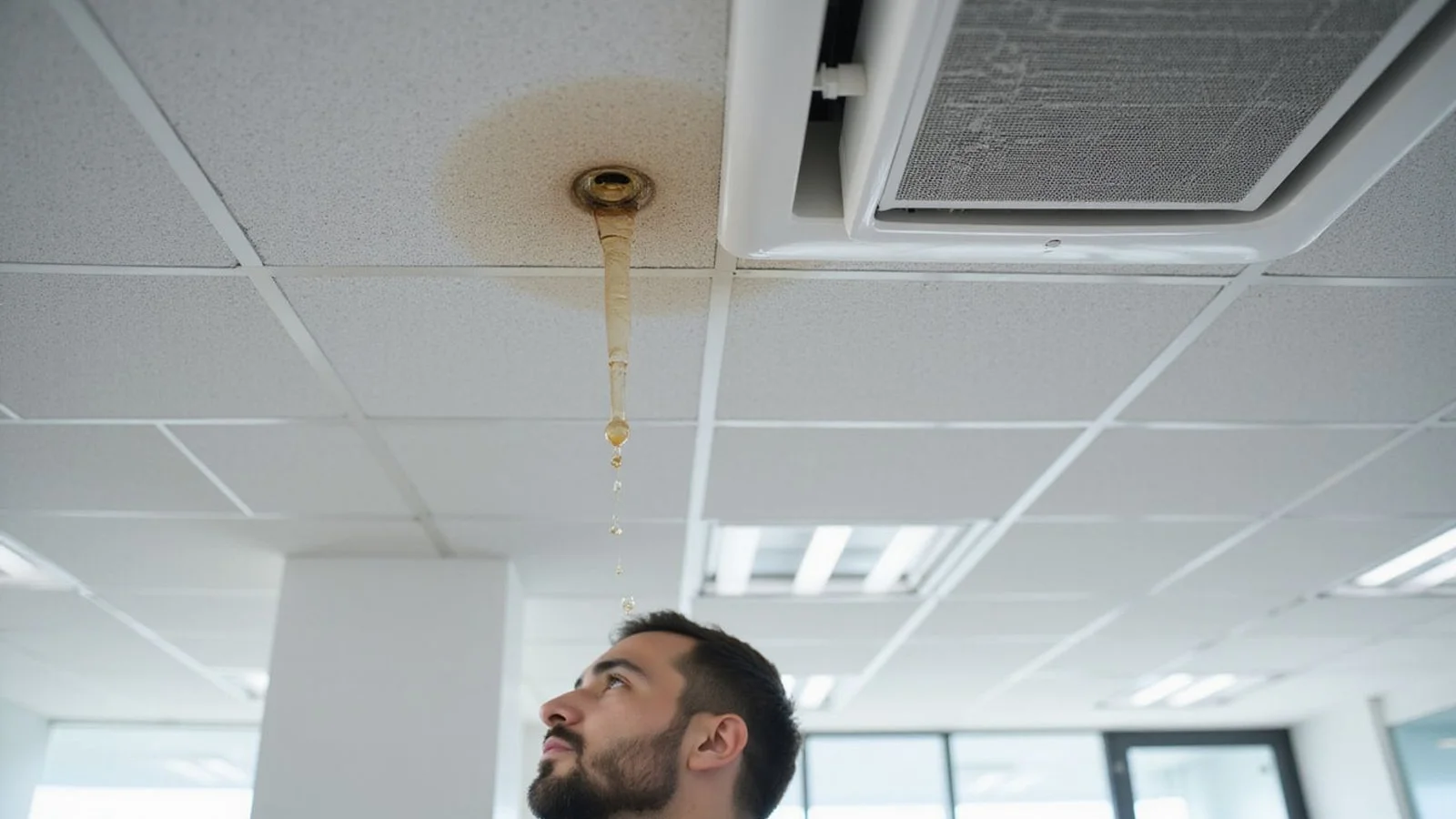
We often see the exact same look of frustration when property managers spot a fresh water stain on their ceiling. That familiar cassette aircond water leaking issue is almost always traced back to a struggling drain pump or a jammed float switch.
Our team knows this specific failure is unique to ceiling cassettes. It is completely different from common wall unit leaks.
Dealing with damaged plaster ceiling tiles is an expensive headache for any Petaling Jaya business. We have found this common problem is entirely preventable with proper quarterly maintenance.
Let’s break down exactly how this system operates and what steps are needed to fix it.
For booking, see cassette aircond servicing.
How a cassette drain pump works
Wall aircond units rely entirely on gravity to drain. We see how condensate simply drips off the evaporator coil into the drain pan. The water then flows effortlessly down a sloping hose.
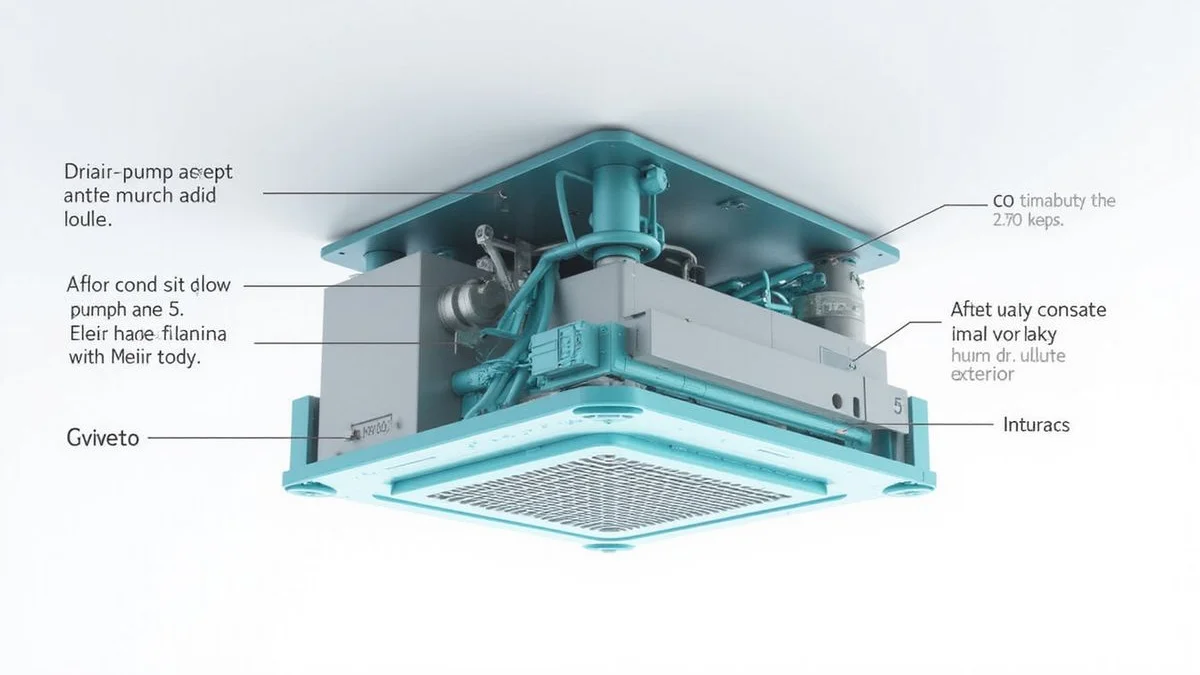
Our team knows cassettes cannot do that since they sit horizontally in your ceiling. There is simply no downward path to release the water. We must rely on a small ceiling cassette drain pump tucked inside the unit body to manage this moisture.
Popular replacement models from brands like Daikin or Dewpoint can effectively lift condensate up to 2.5 meters. Our standard installations route this lifted water into a horizontal PVC pipe in the ceiling cavity. This pipe then connects to your building’s main service riser.
We can break down this drainage cycle into three simple steps:
- Activation: The float switch detects rising water and triggers the pump.
- Extraction: The pump runs for 20 to 60 seconds to clear the tray.
- Reset: The float drops back down, and the pump stops until the tray fills again.
Why pump failure causes ceiling drips
A failed pump or a stuck float switch directly leads to an overflowing drain pan. We frequently encounter this issue because tropical Malaysian weather forces air conditioners to work incredibly hard. A typical 2-ton commercial cassette unit in Petaling Jaya can produce up to 2 litres of condensate water every single hour.
Our technicians see exactly what happens when that massive amount of water has nowhere to go. Condensate simply keeps accumulating in the drain tray until it overflows. We then find water dripping down through the cassette body and escaping through every available seam.
This overflow lands directly on the plaster ceiling or office tiles below the unit. Our clients often discover a cassette unit leaking ceiling water right above their desks. The float switch is explicitly designed to cut off the compressor when the drain tray is completely full.
We notice that this safety mechanism often fails to trigger on older units. The switch is either physically stuck or bypassed with improper wiring. Our repair calls often reveal tiles that have absorbed water, stained visibly brown, and eventually started sagging. Expensive plaster ceiling repairs can easily cost over RM5.50 per square foot for a local contractor to patch.
A quick warning: Ignoring a stuck float switch will result in severe ceiling water damage. The unit will continue to produce condensation until you manually turn off the power.
Symptoms in order of progression
Catching a cassette aircond water leaking issue early can save your office from costly structural damage. We always advise property managers to watch for these distinct warning signs before a minor drip becomes a major flood.
Modern units might even display an error code on the remote. Our maintenance crews look for specific codes like an A3 on a Daikin or an H21 on a Panasonic cassette to diagnose a float switch abnormality. Here is a breakdown of the typical failure stages and what they mean for your system.
| Progression Stage | Symptom to Watch For | What is Actually Happening | Required Action |
|---|---|---|---|
| Stage 1 | Pump is audibly cycling more often than usual. | The pump is working harder to push water, often due to a partial blockage. | Schedule a routine inspection soon. |
| Stage 2 | A slow, intermittent drip falls from below the cassette. | The drain pan is experiencing its first overflow events. | Call for same-day service immediately. |
| Stage 3 | Visible brown staining appears on the ceiling tile. | Water has been overflowing for days and soaking into the plaster. | Turn off the unit and request emergency repair. |
| Stage 4 | A persistent water mark forms and the ceiling sags. | Structural damage has occurred alongside the pump failure. | Plaster ceiling replacement is now required. |
We strongly urge you to call for a same-day inspection if you spot Stage 2 or Stage 3 symptoms. Reaching Stage 4 means you will need to hire a ceiling contractor alongside your air conditioning repair team.
How AMg services the pump
Replacing or cleaning a cassette drain pump requires specific technical steps. We follow a strict diagnostic protocol to ensure complete safety and proper calibration. A typical visit takes around 90 minutes from start to finish.
Our technicians find that most cassette drain pump replacements are single-visit fixes. Here is the exact process used to restore your system:
- Power off the system: Technicians isolate the dedicated cassette circuit at the main breaker.
- Set up scaffolding: Safe access is established below the ceiling unit.
- Remove the cassette grille: The outer casing is taken down to access the internal body.
- Inspect the existing pump: Technicians listen for the pump on power-up and check the impeller for physical damage.
- Test the float switch: The switch is manually triggered to confirm electrical operation.
- Clean the drain tray: All thick, jelly-like biofilm and dust blockages are flushed out.
- Replace the pump: If the motor has failed, a new part is installed.
- Reassemble and test: A poured-water cycle confirms the new pump and float switch work perfectly together.
Our standard replacement parts typically cost between RM200 and RM400, depending on your specific cassette brand. Premium parts may sit at the higher end of that spectrum, but they offer excellent long-term reliability.
Why this happens to cassettes more than wall units
Cassette units fail in this specific way due to their unique design. We routinely handle these repairs because cassettes rely on moving mechanical parts to clear water. They are fundamentally different from a standard wall-mounted air conditioner.
Our team has identified three primary reasons this failure is so common in local commercial setups:
- Pumps are moving parts: Standard wall units do not have an internal motor that can burn out over time.
- Biofilm loads are higher: Constant runtime creates the perfect environment for algae. Our technicians constantly see a thick jelly form inside the tray due to heavy Malaysian dust.
- Float switches stick: Older mechanical switches are often the first weak point. They physically stick to the side of the dirty tray and fail to activate the pump.
Prevention Tip: Quarterly maintenance catches most pump issues before they cause costly ceiling damage.
We strongly encourage following a proper office cassette schedule to prevent these unexpected breakdowns. Reactive callouts and plaster ceiling repairs are always far more expensive than scheduled prevention.
What to do right now if you see a drip
Immediate action is required to protect your office flooring and furniture when water starts falling. We advise you to completely switch off the cassette at the wall isolator or remote control right away. Cutting the power stops the condensation process and prevents the drain tray from overflowing further.
Our team recommends taking these specific steps while you wait for a technician:
- Catch the water: Place a large bucket directly below the drip point.
- Document the damage: Note the exact location of the drip and the extent of the ceiling stain.
- Capture the evidence: WhatsApp a clear photo of the ceiling and the cassette unit to your repair team.
- Keep it off: Do not attempt to run the unit again until the pump is fully inspected.
We are ready to help you resolve this cassette aircond water leaking mess quickly and professionally. Book a cassette repair callout to get a technician on-site. Our team will respond the exact same day for any active leaks within our primary PJ service area.
Frequently asked questions
Why does my cassette leak only when it's been running long? +
Drain pump may be running intermittently — accumulated condensate eventually exceeds pump cycle capacity and overflows. Sign of pump degradation or partial blockage.
Can I replace the cassette drain pump myself? +
Not recommended. Requires partial unit removal, electrical disconnection, and refrigerant-line care. Always use a technician with cassette experience.
How long should a cassette drain pump last? +
5–8 years typical. Heavy commercial use (food courts, busy cafes) shortens this — sometimes failure at 3–4 years.
Ready to book this work with AMg?
5-star Google rating, tidy workmanship, transparent pricing. WhatsApp us for a free quote — same-day response, 8 AM – 6 PM daily.