
Inverter vs Non-Inverter Aircond in Malaysia (2026)
Inverter saves 30–40% on TNB bills but costs RM800–RM1500 more upfront. Here's the payback math for Malaysian homes.
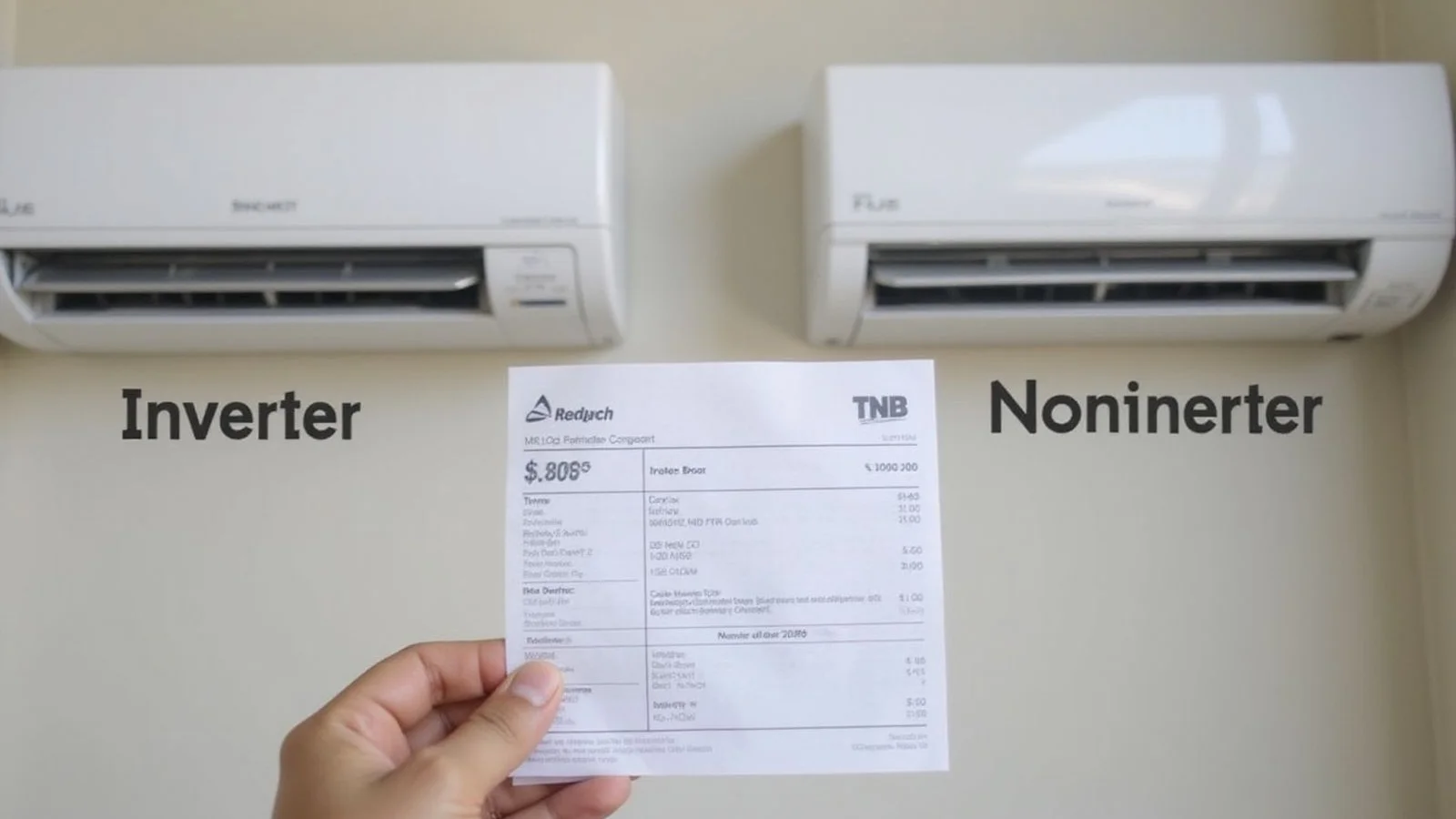
We often see homeowners struggle with the inverter vs non inverter aircond malaysia debate.
This single decision dictates the long-term cost of cooling your home.
Our team receives questions about this exact topic during almost every single quote.
You can see standard booking options at aircond installation.
Let’s break down the real math behind the technology.
How inverter technology works (in 60 seconds)
An inverter aircond adjusts its compressor speed to maintain a steady temperature. A non-inverter unit only runs at full power or switches off completely.
We notice this constant starting and stopping creates massive energy waste. Non-inverter compressors draw intense power spikes. Every time they cycle on, they can pull five to seven times their normal running current.
Our technicians prefer inverter models for two main reasons:
- Smooth operation: They ramp up smoothly to cool the room and then throttle down to a low speed.
- Continuous running: The compressor stays on but uses only a fraction of the electricity.
This steady approach extends the lifespan of the equipment. The unit avoids the mechanical stress of hard starts.
The cost difference
The typical retail price gap between these two technologies sits at around RM800 to RM1,200 for a 1.5 HP unit. Inverter models command a higher upfront premium.
We tracked the 2026 market rates across popular models. The pricing landscape in Malaysia reflects the updated R32 gas requirements. Here is a breakdown of what you can expect to pay for a standard 1.5 HP wall-mounted unit.
| Aircond Type (1.5 HP) | Expected Price Range | Popular Models |
|---|---|---|
| Non-inverter | RM1,000 to RM1,300 | Panasonic Standard, Daikin Standard |
| Inverter (R32) | RM1,650 to RM1,950 | Daikin FTKF, Panasonic X-Deluxe |
Our team finds that higher horsepower units maintain a proportionally similar price gap. You will pay more today for the advanced technology. The real question is how fast that premium pays for itself.
TNB savings math
You can expect significant inverter aircond tnb savings when running a unit for eight hours every night. The monthly difference easily reaches RM43 for a standard bedroom.
We base these calculations on the Malaysian residential tariff structure. The current TNB pricing blocks charge 33.4 sen per kWh for mid-tier usage and jump to 51.6 sen past 300 kWh. Keeping your usage in the lower tiers saves serious money.
- Non-inverter 1.5 HP: A standard unit consumes roughly 1.2 kWh. Running it 8 hours a night for 30 days totals 288 kWh. At an average RM0.40 rate, that costs RM115 per month.
- Inverter R32 1.5 HP: The variable speed compressor uses about 0.75 kWh. The same 8-hour nightly usage totals 180 kWh. This brings the cost down to just RM72 per month.
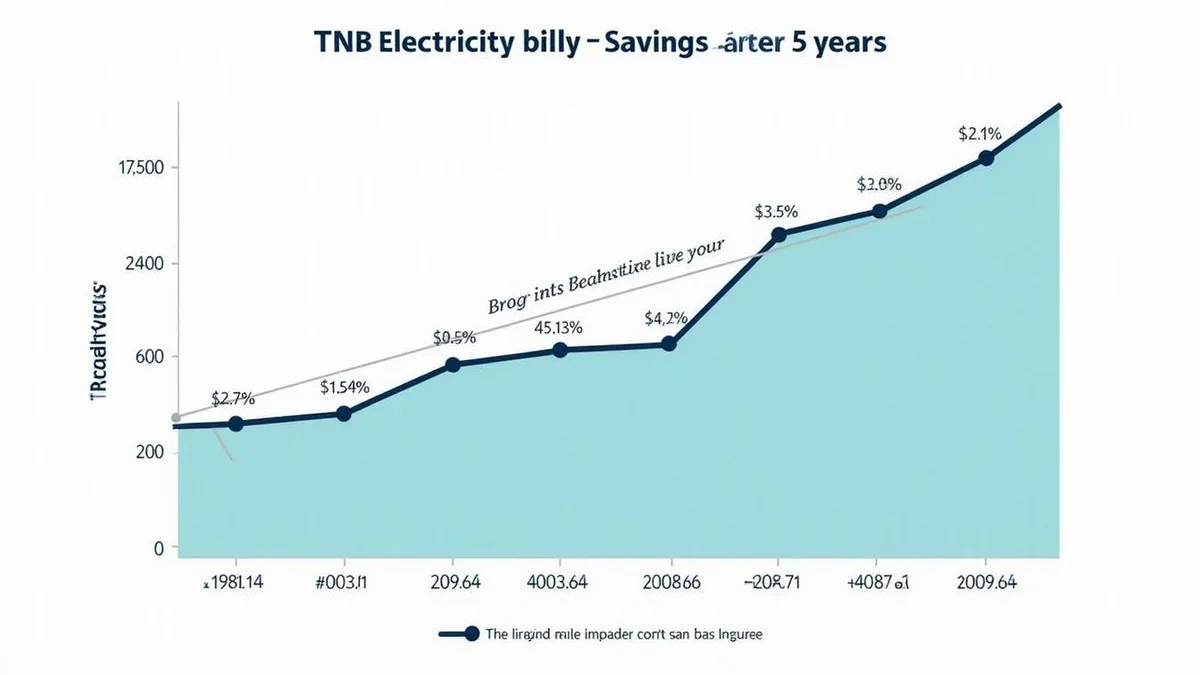
Our field data shows an annual savings of roughly RM516 per year. These figures fluctuate based on your room size and target temperature. Keep in mind that setting the thermostat to 24 degrees Celsius optimizes this efficiency.
Payback period
An inverter unit pays for its premium in roughly 23 months of daily use. After hitting that breakeven point, the monthly electricity savings become pure profit.
We calculate this by dividing the RM1,000 average upfront premium by the RM43 monthly savings. Most quality air conditioners last at least ten years. This means you secure RM516 in annual savings for the remaining seven to eight years of the system’s life.
- Single Bedroom: You net roughly RM3,500 to RM4,000 in savings over a decade.
- Three Bedrooms: A typical Petaling Jaya household can save RM10,000 to RM12,000 over the lifetime of the units.
Our installers recommend factoring in the initial RM3,000 premium for upgrading three rooms. The net positive return remains massive for any space used daily.
When non-inverter still wins
A non inverter aircond worth it scenario usually involves rooms cooled for less than three hours a day. The high upfront cost of an inverter simply does not make sense for spaces rarely used.
We advise clients to skip the premium models for specific situations:
- Guest rooms: Spaces used only a few weekends a month will never reach the payback breakeven point.
- Holiday properties: Homes left unoccupied for long stretches do not generate enough monthly utility bills to justify the upgrade.
- Tight upfront budgets: If an extra RM1,000 is a hard constraint today, buy the basic unit now. You can upgrade to a modern R32 inverter in a decade.
Our standard advice is to stick with advanced technology for your main bedroom and home office. The math heavily favors the premium option in high-traffic areas.
What about the secondary benefits?
Inverter systems offer better humidity control and run significantly quieter than standard models. These comfort upgrades often justify the price tag even without the utility savings.
We install these units daily and notice stark differences in overall performance.
Comfort and Noise Levels
An inverter compressor throttles down to a low speed instead of abruptly shutting off. This creates a smooth and consistent noise profile. Models from Daikin and Mitsubishi Electric operate at whisper-quiet levels. Their indoor units can drop down to just 19 decibels.
Our customers frequently praise the superior humidity control. Running constantly at a low speed extracts moisture from the air continuously. This prevents the room from feeling clammy and uncomfortable during the night.
Equipment Lifespan and Protection
These units feature a much lower start-up current draw. This steady power usage is far easier on your home’s dedicated AC circuit breakers. Inverter units routinely outlast equivalent non-inverter systems by two to three years.
We highly recommend installing a dedicated outdoor surge protector for your new system. Malaysia experiences intense lightning storms. A simple RM80 isolator switch protects the sensitive RM600 inverter circuit board from voltage spikes.
Brand and model choice
Daikin and Panasonic currently lead the Malaysian market for reliable R32 inverter models. Acson serves as an excellent value option with strong local support.
We find that Daikin’s FTKF series delivers outstanding long-term durability. Panasonic’s X-Deluxe series competes closely by offering excellent air purification features. Mitsubishi Electric remains the top choice for buyers prioritizing absolute silence.
You can compare specific unit ratings on our best aircond brands page.
Our technicians also provide a full breakdown of expected labor charges in our installation cost guide. This ensures you know exactly what to expect.
How to decide
Choose an inverter model if you plan to run the cooling system for more than three hours a day. Opt for a standard unit if the room sees very light or occasional use.
We base this rule on straightforward payback math. High usage guarantees a return on your investment within two years. Occasional use stretches that payback period far beyond the useful life of the appliance.
Our team is ready to help you finalize your choice. Send us your room size and daily usage habits via WhatsApp. We will recommend the ideal brand and capacity before quoting the install.
Frequently asked questions
Is inverter aircond always worth the extra cost? +
For daily-use units in main rooms, yes — payback in 2–3 years and 8–10 years of savings after that. For occasional-use guest rooms, non-inverter is fine and saves on upfront cost.
How much do I save monthly on TNB with inverter? +
Typically RM30–RM80 per month per unit depending on usage hours and HP rating. The savings compound across multiple units.
Does inverter aircond cool faster? +
Initially yes — the variable-speed compressor ramps up quickly to hit set temperature, then settles into a steady low-power mode. Non-inverter takes longer to cool and cycles on/off afterwards.
Ready to book this work with AMg?
5-star Google rating, tidy workmanship, transparent pricing. WhatsApp us for a free quote — same-day response, 8 AM – 6 PM daily.