
6 Signs Your Aircond Needs a Chemical Overhaul
Mould on louvers, foul smell, water dripping, weak airflow, high TNB bill, 12+ months since last wash — six signs an overhaul is overdue.
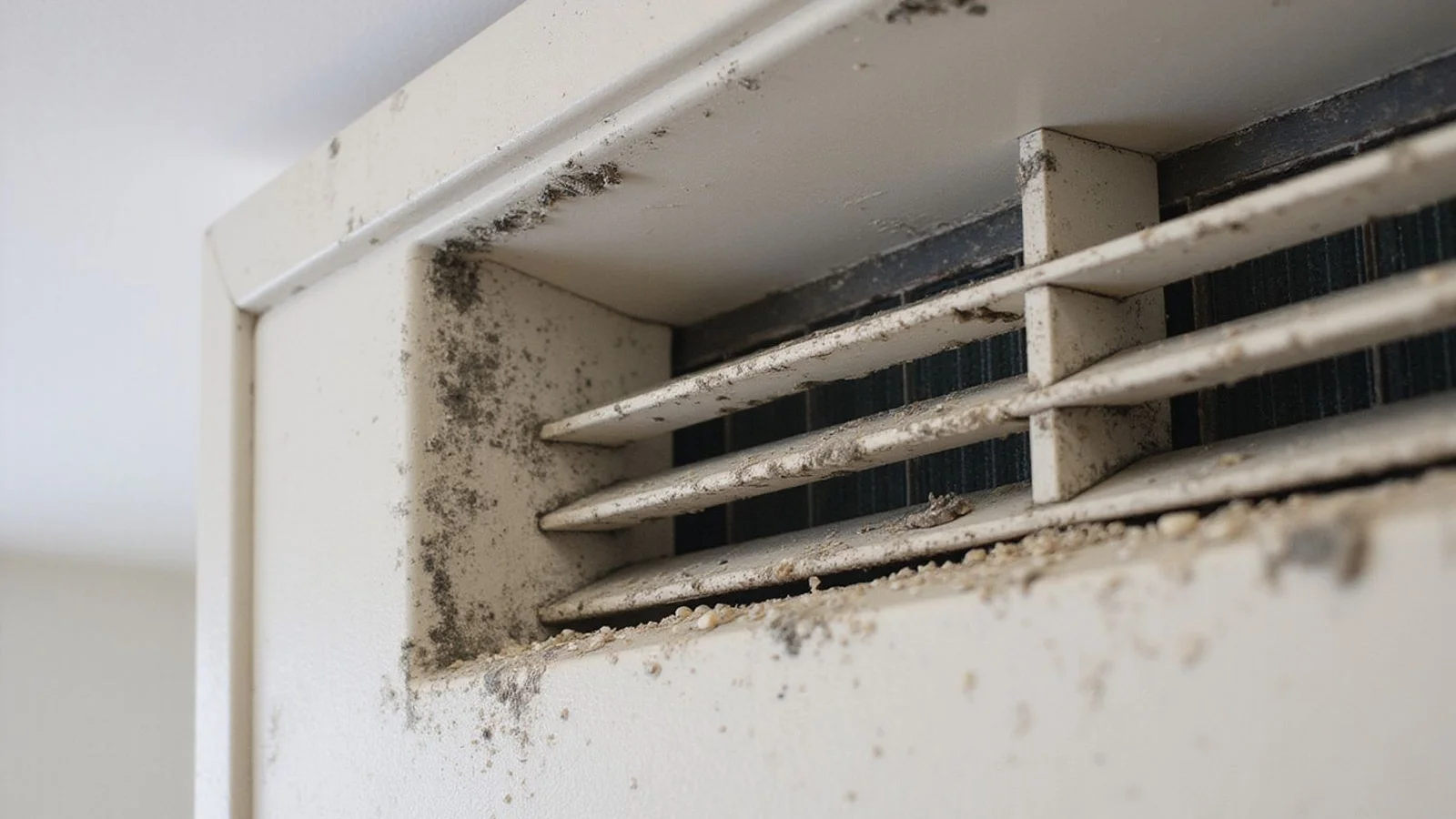
We often encounter Petaling Jaya units running far below their original efficiency. The line between needing a basic service and a major intervention gets crossed quickly in this region.
Our team sees standard chemical washes working perfectly for airconds that are just a year overdue. However, a chemical overhaul is necessary for a unit that is two-plus years overdue, has visible mould, or shows multiple symptoms at once.
We use six clear indicators to determine which side of the line your unit sits on.
Recognising the precise signs aircond needs chemical wash versus a major overhaul saves you time and money. For the full overhaul service spec and pricing, you can review the details on our aircond chemical wash service. Reviewing the data helps clarify the exact solutions.
Sign 1: Visible mould on louvers or behind the front panel
Open the indoor unit’s front cover and look directly at the louvers and the underside of the air intake grille. Black or dark-green growth means you have colonised mould, which requires a full overhaul to eradicate.
We know the local Petaling Jaya climate averages around 80% humidity year-round, creating the perfect breeding ground for Aspergillus mould. This is not surface dust. It is living biological growth that anchors into every porous surface of the plastic.
Our technicians find that a standard chemical wash simply chases it off the main coil but cannot reach every tight crevice. An overhaul process fully dismantles the louvers and washes them individually to destroy the spores.
Look for mould in these common hideouts:
- Deep inside the horizontal louvers
- Along the inner edges of the air intake grille
- Behind the primary dust filters
- Deep within the blower wheel housing
Sign 2: Foul or musty smell when AC starts up
A foul, wet-towel odour in the first 30 seconds of startup is a clear sign that biological slime has taken over the internal components. This creates a strong aircond mould smell, making it the most common reason customers finally book an overhaul.
We note that the immediate smell is the air picking up volatile organic compounds (VOCs) from bacteria like Pseudomonas. The smell then fades as the cool airflow stabilises and numbs your olfactory senses.
Our experience shows that if a previous wash did not kill the smell, or if it returned within months, the bacteria has penetrated the insulation foam. An overhaul is the right next step because it allows for scrubbing the foam and deep-cleaning the hidden chassis.
“A lingering musty smell usually means the bacteria has spread beyond the main coil and into the unit’s porous insulation foam, requiring manual extraction.”
Sign 3: Water dripping despite a clear drain hose
If you notice aircond water leaking dirty from the indoor unit while the outside hose flows fine, the internal drain pan is likely choked with biofilm. You need an overhaul to physically remove this solid blockage.
We often find that biological growth narrows the drain path inside the pan itself, forcing condensation to overflow. A standard wash simply cannot get into the tight pan corners.
Our standard protocol is to lift the pan out entirely and soak it clean during an overhaul. Malaysia’s high humidity means airconds generate massive amounts of condensation hourly. This constant moisture feeds the biofilm until it solidifies like jelly, requiring manual extraction. Our step-by-step chemical overhaul process guide shows exactly how we lift and soak each component.
Common signs of a choked drain pan include:
- Water pooling along the bottom edge of the indoor unit
- Occasional spitting of water droplets from the air vent
- A gurgling sound when the compressor shuts off
Sign 4: Weak airflow even after cleaning the filter
Weak airflow after rinsing your filter points to an evaporator coil clogged with embedded dust or a blower wheel coated in biological film. Both issues require partial or full disassembly via an overhaul.
We measure significant performance drops when dust cakes onto these internal layers. A buildup of just one-eighth of an inch of dust on the blower wheel reduces its aerodynamic efficiency by up to 30%.
Our readings show the motor has to work much harder just to spin the unbalanced weight. The overhaul process pulls the entire blower wheel out to pressure wash the blades. This action restores the factory RPM and instantly improves the cooling throw across your room.
Common culprits for restricted airflow include:
- Embedded dust suffocating the evaporator coil fins
- Biological film altering the blower wheel aerodynamics
- Pet dander bypassing the primary mesh filters
Sign 5: TNB bill is creeping up
A sudden RM50 or more increase in your monthly TNB bill, without a change in usage habits, strongly indicates a heavily-fouled unit. An overhaul recovers that lost efficiency by restoring the system to factory-clean conditions.
We track how a choked unit can run 25 to 35% less efficiently because the compressor stays on longer to hit the set temperature. This prolonged running time pushes your household into a higher Tenaga Nasional Berhad (TNB) electricity tariff block.
Our residential clients often do not realise how punitive the higher usage blocks are. Under the 2026 TNB Domestic Tariff A structure, excess usage gets expensive very quickly.
| Monthly Usage Block | Current Rate (sen/kWh) | Cost Impact |
|---|---|---|
| First 200 kWh | 21.80 | Baseline essential usage |
| 201 to 300 kWh | 33.40 | Moderate cooling penalty |
| 301 to 600 kWh | 51.60 | High energy penalty zone |
We note that a chemical wash recovers most of this lost efficiency. However, an overhaul recovers it all if the buildup is at extreme levels.
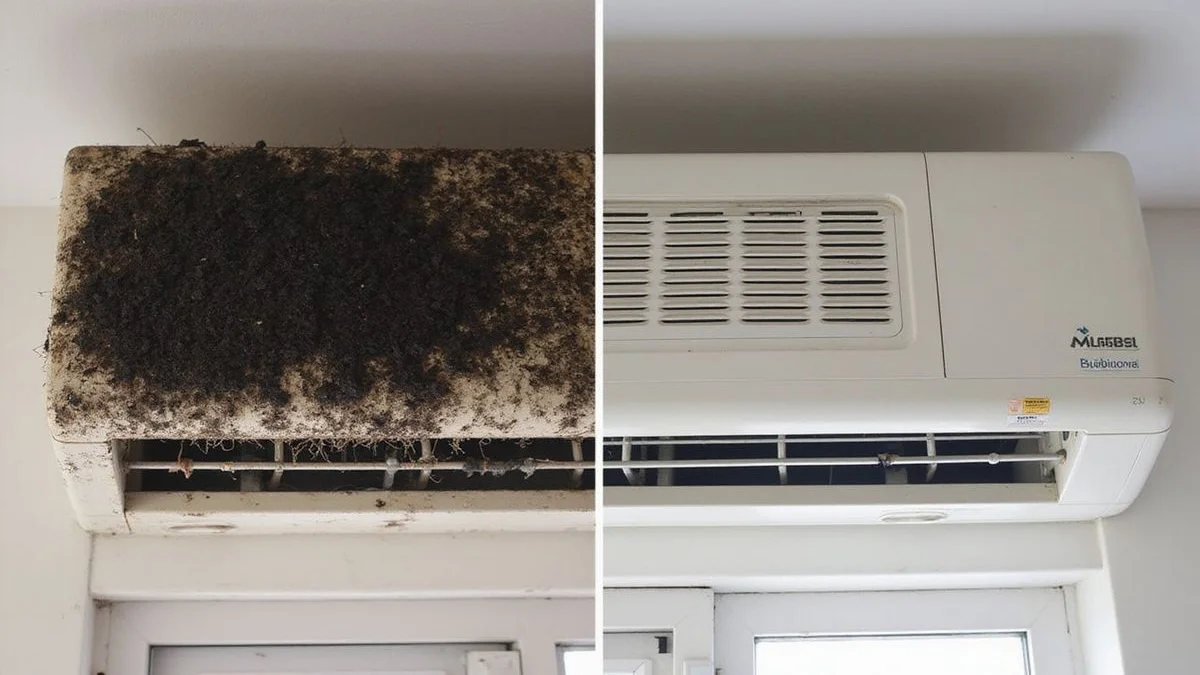
Sign 6: More than 12 months since last chemical wash, or never had one
If it has been over 12 months, or if you inherited the unit from a previous owner without service records, default to an overhaul. Most homeowners assume the unit is just dusty, but it actually harbours years of sticky cooking aerosols and drain biofilm.
We consistently see that Petaling Jaya’s urban environment, combined with seasonal PM2.5 haze, clogs systems much faster than in rural areas. The high 80% ambient humidity traps airborne particulates directly inside the cooling fins.
Our team highly recommends an overhaul as the right starting point to completely reset the baseline. Thereafter, you can safely maintain a 12 to 18-month chemical wash cycle.
Common environmental factors forcing a major overhaul include:
- Seasonal PM2.5 haze particulates
- High ambient humidity exceeding 80%
- Indoor cooking oils and sticky aerosols
Wash, overhaul, or replace?
If your unit displays multiple severe symptoms, replacement is likely the smarter financial move. The repair-vs-replacement guide walks through the exact calculation threshold to help you decide.
We factor in the Department of Environment’s strict phase-out schedule for R22 in Malaysia, which targets a complete ban by 2030 under the HPMP Stage III framework. Repairing an obsolete system becomes more expensive every year as parts and refrigerant vanish from the market.
Our data shows that for most younger units, an overhaul restores over 90% of original performance for a fraction of a new installation cost. WhatsApp us a clear photo of your indoor unit’s louvers and the area inside the front cover.
We will tell you whether to wash, overhaul, or replace based on what is visible, and provide a written quote before any work begins.
Key factors that point to a full replacement include:
- Unit age exceeding 10 years
- System reliance on phased-out R22 refrigerant
- Three or more major overhaul indicators present simultaneously
Frequently asked questions
Can I just do a chemical wash instead of an overhaul? +
Wash is for moderate buildup; overhaul is for heavy mould or scale. If you've never had the unit deeply cleaned, overhaul is usually the right starting point — then maintain with chemical wash every 12–18 months.
Is the mould smell harmful? +
It worsens allergies and asthma but isn't acutely toxic. The bigger issue is that the smell signals biological growth, and that growth is reducing your airflow and pumping particles into your breathing air.
How long since last service is too long? +
18 months in residential daily-use, 9 months in commercial cassettes or smoker households. Beyond those, overhaul (not just wash) is the right tier.
Ready to book this work with AMg?
5-star Google rating, tidy workmanship, transparent pricing. WhatsApp us for a free quote — same-day response, 8 AM – 6 PM daily.