
What Is Aircond Chemical Wash and How Does It Work?
Chemical wash uses phosphoric/alkaline cleaner on aircond coils to dissolve mould, slime, and dirt that pressure water alone can't reach.
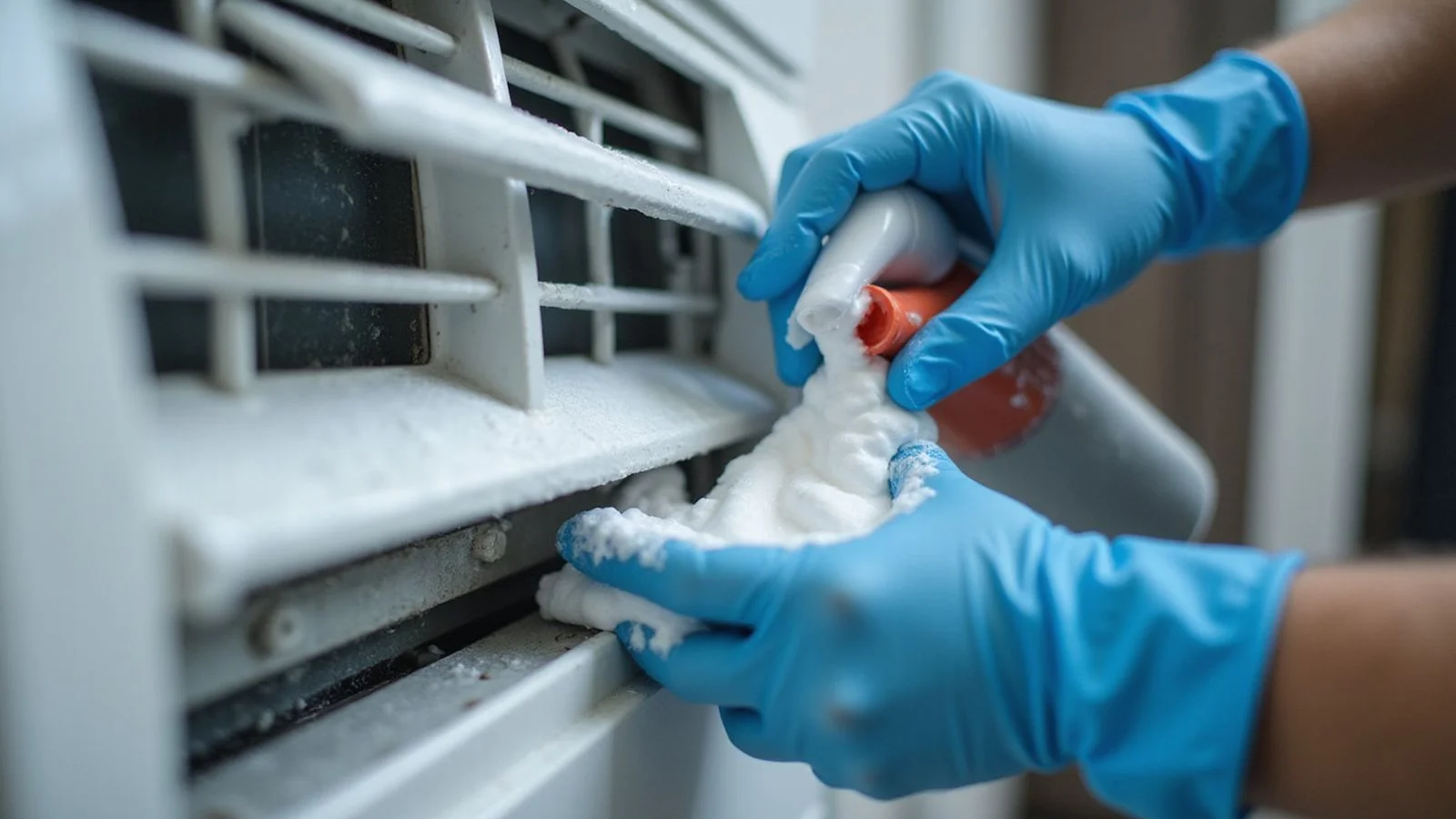
We often hear property managers worry about the harsh chemicals used in air conditioning maintenance. Customers frequently ask us exactly what is aircond chemical wash and how it protects their equipment. Our team applies an HVAC-grade coil cleaner as a thick foam inside a sealed containment bag.
A thorough neutral rinse then washes everything away, leaving zero residue behind. We will break down exactly how chemical wash works and why it matters for your indoor air. For the full service offering and pricing, see our aircond chemical wash service.
The plain-language definition
A chemical wash is a deeper-than-standard service that uses a chemical coil cleaner instead of just pressurised water. Our routine inspections show that dirty aircond coils can increase energy consumption by up to 15%. Understanding the true chemical wash aircond meaning starts with knowing this difference in cleaning power.
We rely on this deep cleaning method to safely dissolve mould, biological slime, and mineral scale. The Department of Occupational Safety and Health (DOSH) Malaysia highlights the importance of maintaining good Indoor Air Quality to prevent respiratory issues. Our service ensures your unit complies with these critical health standards.
The chemistry in these washes performs a job that plain water physically cannot achieve. We use it to break down the molecular bonds of stubborn substances clinging to the aluminium fins. Once the chemical breaks down the grime, a pressure rinse safely carries the debris away.
What chemicals are actually used
We use two main categories of cleaning solutions, depending entirely on the type of buildup present on your coils. The correct choice prevents damage to the delicate metal components.
- Phosphoric acid coil cleaner: This treats hardened mineral scale, severe oxidation, and stubborn grime. It is mildly acidic but safe at the specific dilutions HVAC professionals use, and the process requires a thorough neutralising rinse.
- Alkaline coil cleaner: This targets biological growth like mould, mildew, and bacterial slime. Brands like Koya or Kleenso provide commercial-grade alkaline solutions that easily lift organic slime off the fins.
Our technicians carefully dilute these commercial solutions, often using a 20% concentration for light dirt and up to 50% for severe industrial grime. Both types are certified for indoor air application and rinse to a neutral pH.
We strongly advise against using standard DIY-store degreasers or home remedies like vinegar. These improper chemicals either fail to dissolve coil scale or actively corrode the aluminium over time.
Which parts get treated
Our complete chemical service targets four critical components hidden inside your cooling system. These parts are the primary breeding grounds for poor air quality and efficiency loss.
- Evaporator coil: This bank of metal fins inside the indoor unit handles the core heat-exchange process. Because these fins sit only millimetres apart, they trap fine dust and PM2.5 particles, creating a perfect home for mould.
- Condenser coil: The outdoor unit houses this secondary bank of fins. Mineral scale and heavy atmospheric grime accumulate here from constant exposure to the elements.
- Drain pan: This tray catches the natural condensation dripping off the evaporator coil. Bacterial biofilm often grows into a thick jelly here, which is the leading cause of sudden water leaks in Petaling Jaya high-rise apartments.
- Blower wheel: This cylindrical fan pushes the newly cooled air into your room. Dust and slime cake onto the curved blades, significantly robbing the unit of its airflow power.
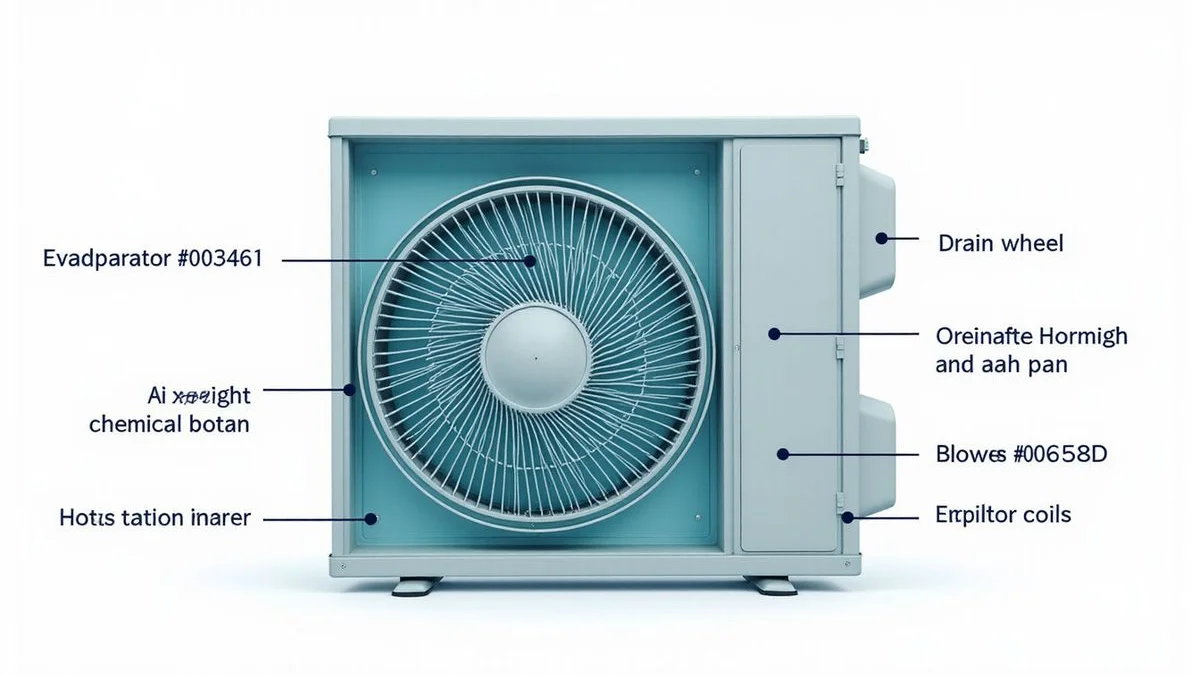
We ensure each of these zones receives targeted chemical application. Skipping even one of these areas guarantees the slime will return within a few weeks.
Why pressurised water alone isn’t enough
Our standard service relies on pressurised water to flush the coil, which works perfectly for a basic three-month preventive clean. Pressurised water alone generally only clears the top 20% to 30% of loose surface dust.
It simply cannot dissolve what has already chemically bonded to the metal. Water just runs over layers of oxidised mineral scale, dried biological slime, or the protein-based biofilm clogging the drain hose.
We see many well-intentioned owners try to solve this by increasing the water pressure. Blasting the unit with high-pressure water usually just bends the fragile aluminium fins, permanently ruining the equipment. Chemical cleaners break these tough bonds down at the molecular level so a gentle rinse can remove them.
| Service Type | Primary Action | Best Used For |
|---|---|---|
| Water Wash Only | Flushes loose surface dust | Routine 3-month maintenance |
| Chemical Wash | Dissolves bonded molecular grime | Annual deep cleaning and mould removal |
Our team warns against DIY chemical washing for this exact reason. Without the correct chemical strength, precise contact time, and a thorough neutral rinse, you risk leaving corrosive residue on the internal seals.
Safety: how the chemicals are contained
We build the entire wash sequence around strict containment and property protection. This careful process ensures zero spillage on your expensive parquet floors or office carpets.
- Protective wash bag: A specialised, chemical-resistant funnel bag is fitted tightly around the indoor unit body. This catches every drop of chemical and rinse water, directing it safely into a collection bucket.
- Furniture covers: Waterproof drop cloths placed below the unit catch any stray drips.
- Power isolated: The technician physically shuts off the power at the main AC switch. Electrical current must never mix with wet cleaning agents.
- Neutral rinse: Copious amounts of fresh water flush the system after the cleaner has done its work. This critical step returns the internal components to a perfectly neutral pH.
- Reassembly and dry-run: The technician dries all components before piecing the unit back together. The system then runs for a 10-minute dry-run protocol on pure fan mode before returning to normal cooling.
Our standard protocol guarantees that you will not smell anything for more than 20 to 30 minutes after the technician leaves.
When an inexperienced provider does this poorly, you might smell an ammonia-like or chemical residue for days. We recommend calling the provider back immediately for a proper secondary rinse if you notice this strong odour.
Should you do it?
We generally recommend this service if your unit has not been chemically washed in over twelve months. Malaysia experiences a constant 70% to 80% relative humidity, which creates the perfect breeding ground for rapid mould growth inside dark aircond units.
You absolutely need this deep clean if you notice any of these warning signs:
- Weak or inconsistent airflow
- A sour or musty smell when turning the unit on
- Suddenly rising TNB electricity bills without increased usage
A clogged compressor works twice as hard to cool a room, burning significantly more power in the process. Our advice is to skip the chemical wash if your unit is brand new or had a deep clean within the last six months. A standard water service is entirely sufficient for those newer systems.
For the boundary cases, the wash vs service vs overhaul comparison walks through exactly how to choose the best option. We are also happy to review your specific situation directly. Simply WhatsApp us a photo of the indoor unit and our technicians will recommend the right tier for your needs.
Frequently asked questions
Will chemical wash damage my aircond? +
No, when done correctly. Coil cleaners are designed for HVAC use. Damage only happens with the wrong chemical, the wrong dilution, or incomplete rinsing — which is why DIY chemical wash kits sold online are a bad idea.
Does the chemical smell linger after? +
Rinsed thoroughly with neutral-rinse, the smell clears within 30 minutes. AMg uses chemicals designed for residential indoor use — no kerosene or harsh solvents.
Can I just use vinegar at home instead? +
Vinegar is too weak to dissolve hardened biological slime or mineral scale, and it can't safely reach the deep coil fins without dismantling the unit. It's better than nothing for a filter rinse, but it's not chemical wash.
Ready to book this work with AMg?
5-star Google rating, tidy workmanship, transparent pricing. WhatsApp us for a free quote — same-day response, 8 AM – 6 PM daily.